
LTHR Tracking with Spivi
Turn Heart Rate Data into Smarter Fitness Insights
LTHR, or Lactate Threshold Heart Rate, is one of the most useful heart rate metrics for understanding workout intensity, endurance, and fitness progress.
In simple terms, LTHR represents the approximate heart rate a person can sustain during a hard, steady effort before fatigue begins to build quickly. It helps identify the point where exercise shifts from challenging but controlled to difficult to maintain.
Spivi uses heart rate data to help members, instructors, and studios better understand effort during class. By incorporating LTHR into group fitness tracking, Spivi can provide a deeper view of performance across cycling, HIIT, functional training, bootcamp, treadmill, rowing, and other heart rate-based workouts.
What Is LTHR?
Lactate Threshold Heart Rate is the heart rate associated with a person’s threshold effort.
Below this threshold, the body can usually sustain exercise for longer periods. Near this threshold, the member is working at a strong and challenging intensity. Above this threshold, the effort becomes more demanding and is usually sustainable only for shorter intervals.
This makes LTHR a powerful metric for understanding not only how hard someone is working, but also how efficiently they are training.
How Spivi Uses LTHR in Class
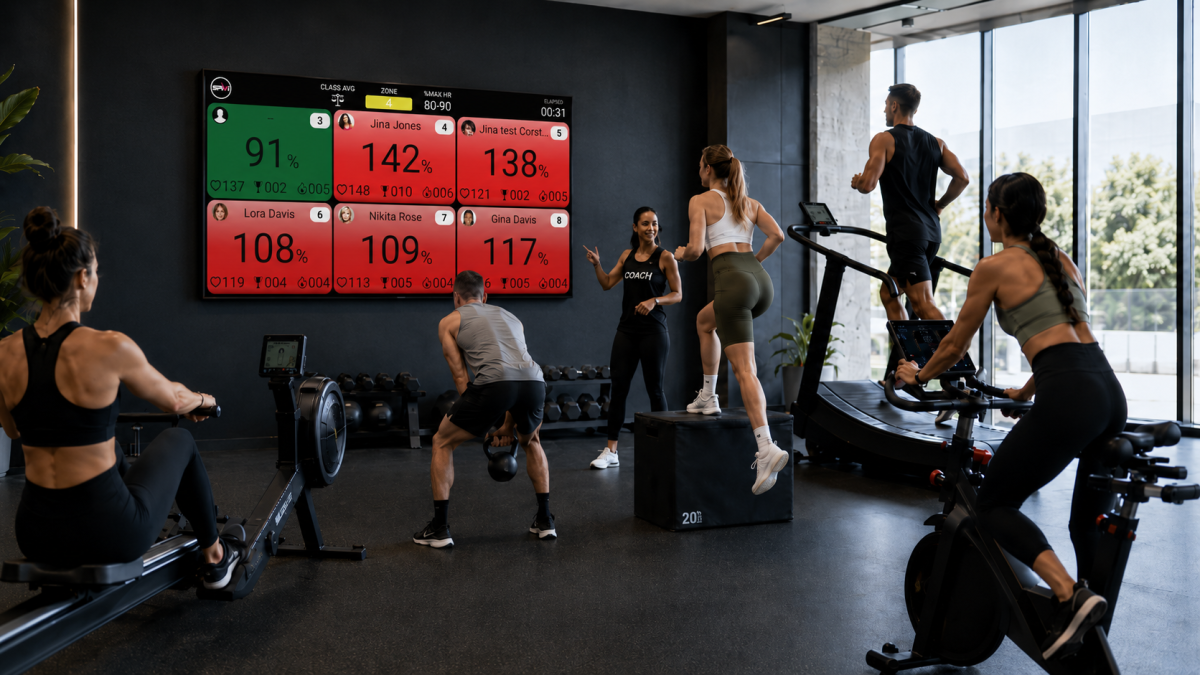
Spivi can collect heart rate data from a wide range of wearable devices, making LTHR-based tracking accessible across different class formats and studio setups. Members can use ANT+ heart rate straps, Bluetooth Low Energy heart rate monitors connected via the Spivi Go app, and compatible smartwatches such as Apple Watch and Samsung Galaxy Watch. This flexibility allows Spivi to bring each member’s live heart rate into the class display, compare it with their personal LTHR, and track time spent below, near, or above threshold. By supporting common wearable technologies, Spivi helps studios deliver personalized heart rate training without requiring every member to use the same device.
Spivi already displays real-time heart rate, heart rate zones, calories, effort, points, and performance data during class. LTHR adds another personalized layer to that experience.
Instead of only looking at heart rate as a percentage of maximum heart rate, LTHR helps members understand how their current effort compares to their own sustainable threshold.
For example, Spivi can help show whether a member is training:
Below LTHR
A sustainable effort level often associated with aerobic conditioning, steady endurance work, warmups, and recovery.
Near LTHR
A challenging effort level where the member is working close to their strong steady-state limit.
Above LTHR
A high-intensity effort level often seen during sprints, intervals, climbs, burpees, rowing intervals, treadmill pushes, and other demanding class segments.
This gives members a clearer understanding of how their body is responding during class.
LTHR for Cycling, HIIT, and Group Fitness
LTHR is not only useful for indoor cycling. It can also help measure performance in many types of group training classes.
In a cycling class, Spivi can combine LTHR with watts, RPM, distance, calories, SEP, and challenge results to show how efficiently a rider performs at different intensity levels.
In a HIIT or functional training class, Spivi can use LTHR to track effort spikes, recovery, and conditioning across intervals. Members may rise above LTHR during intense movements, then recover below LTHR between rounds. Tracking this pattern helps show how well they manage intensity and recovery throughout the workout.
This is especially valuable in classes where intensity changes quickly, such as:
Indoor cycling
HIIT
Functional training
Bootcamp
Treadmill classes
Rowing classes
Strength and conditioning
Group heart rate training
Better Data for Members and Studios
LTHR helps turn heart rate tracking into a more meaningful performance tool.
With Spivi, members can see how much time they spent below, near, or above their threshold. Over time, this information can help them understand whether their conditioning is improving.
For example, Spivi can help identify improvements such as:
Spending more time at higher intensity with better control
Recovering faster after intervals
Producing more watts at the same heart rate
Burning more calories with improved efficiency
Earning more SEP during similar workouts
Completing more work while staying below the threshold
Improving performance across repeated classes or tests
For studios, LTHR-based tracking creates a more personalized and engaging member experience. It helps members understand their progress, stay motivated, and connect their class performance to long-term fitness improvement.
Example Spivi LTHR Insights
Spivi can present LTHR data in a way that is simple, visual, and easy to understand.
Examples include:
LTHR: 165 bpm
You spent 9 minutes above LTHR.
You reached your LTHR during 6 of 8 HIIT intervals.
Your recovery heart rate improved between rounds.
Your average watts near LTHR increased compared with your previous cycling class.
You completed more work while staying below your threshold.
These insights make workout data easier to understand and more useful for both members and instructors.
Why LTHR Matters
Maximum heart rate is helpful, but it does not always tell the full story. Two members may have similar maximum heart rates but very different fitness levels, endurance, recovery ability, and training capacity.
LTHR provides a more personal view of intensity. It helps members understand not only how high their heart rate went, but how their body handled the effort.
That makes LTHR a valuable metric for tracking fitness progress over time.
Smarter Heart Rate Training with Spivi
Spivi helps studios transform heart rate data into an interactive class experience. By adding LTHR-based tracking, Spivi can give members a clearer picture of their workout intensity, recovery, and improvement.
Whether the class is cycling, HIIT, treadmill, rowing, bootcamp, or functional training, LTHR helps members train smarter, understand their progress, and stay more engaged.
With Spivi, heart rate tracking becomes more than a live display. It becomes a powerful tool for performance, motivation, and long-term fitness growth.